

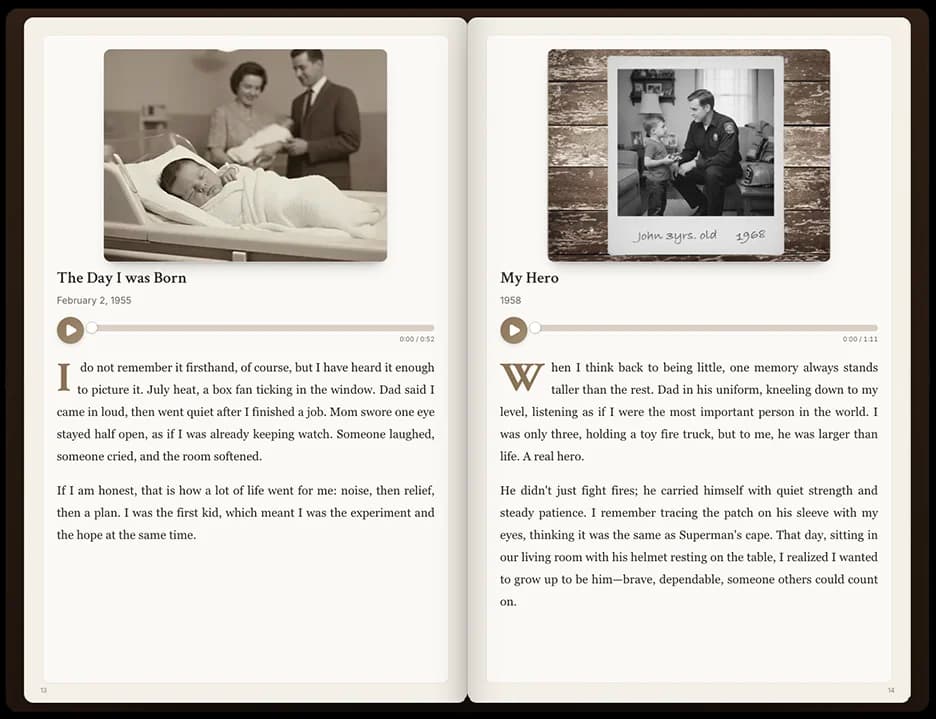
Uncles are an underused family-history source. They're closer to your parent's generation than a grandparent. They saw your mom or dad as a sibling — through teen years, military years, twenties, the chapters that actually shaped who your parent became. And many uncles have entire arcs of their own — careers, service, partnerships, choices — that nobody asks about because the spotlight tends to land on grandparents.
This is the list to change that.
Quick Answer
Best questions to ask your uncle: Start concrete — his first car, his first job, his career, his service if any. Move into questions about your mom or dad as a sibling, the family stories nobody else has told, and his own choices. Use specific event-based prompts over open-ended ones — research shows 25-40% better recall with structured questions, without increasing memory errors.¹
Why this matters: Uncles often hold the unfiltered family stories. Your parent edits the version they tell you. Your grandparents buried the things that were too hard. Your uncle usually has the truth in between — and stories about himself nobody has bothered to ask for.
| Time you have | What to ask |
|---|---|
| 5 minutes | "What was [my parent] like as a kid?" or "Tell me about your first car." |
| 30 minutes | First-car/first-job, one about your parent as a kid, one about his own life choices |
| A weekend | His childhood → his parents → your parent as a kid → his career or service → family stories nobody talks about |
| An ongoing project | All 100+ questions below, over multiple sessions, recorded |
Concrete questions first. Family-history questions later. Trust the order.
Before You Begin: Why Uncles Are a Different Conversation
Quick answer: Most uncles won't volunteer their stories. They'll answer specific questions in detail, but "tell me about your life" usually gets a shrug. This list is built around the concrete prompts uncles actually answer.
A few principles before you start:
- Ask about him first, not just as a source for your parent. Uncles who feel asked-about as themselves open up much more candidly about everyone else. Don't make him feel like he's a research interview about your dad or mom.
- Talk one-on-one. Most uncles will share in private what they'd never say at a family event. Plan a quiet visit, a long lunch, or a recorded phone call.
- Get his permission. Tell him you're recording and ask if it's okay. Almost everyone says yes — many are flattered to be asked.
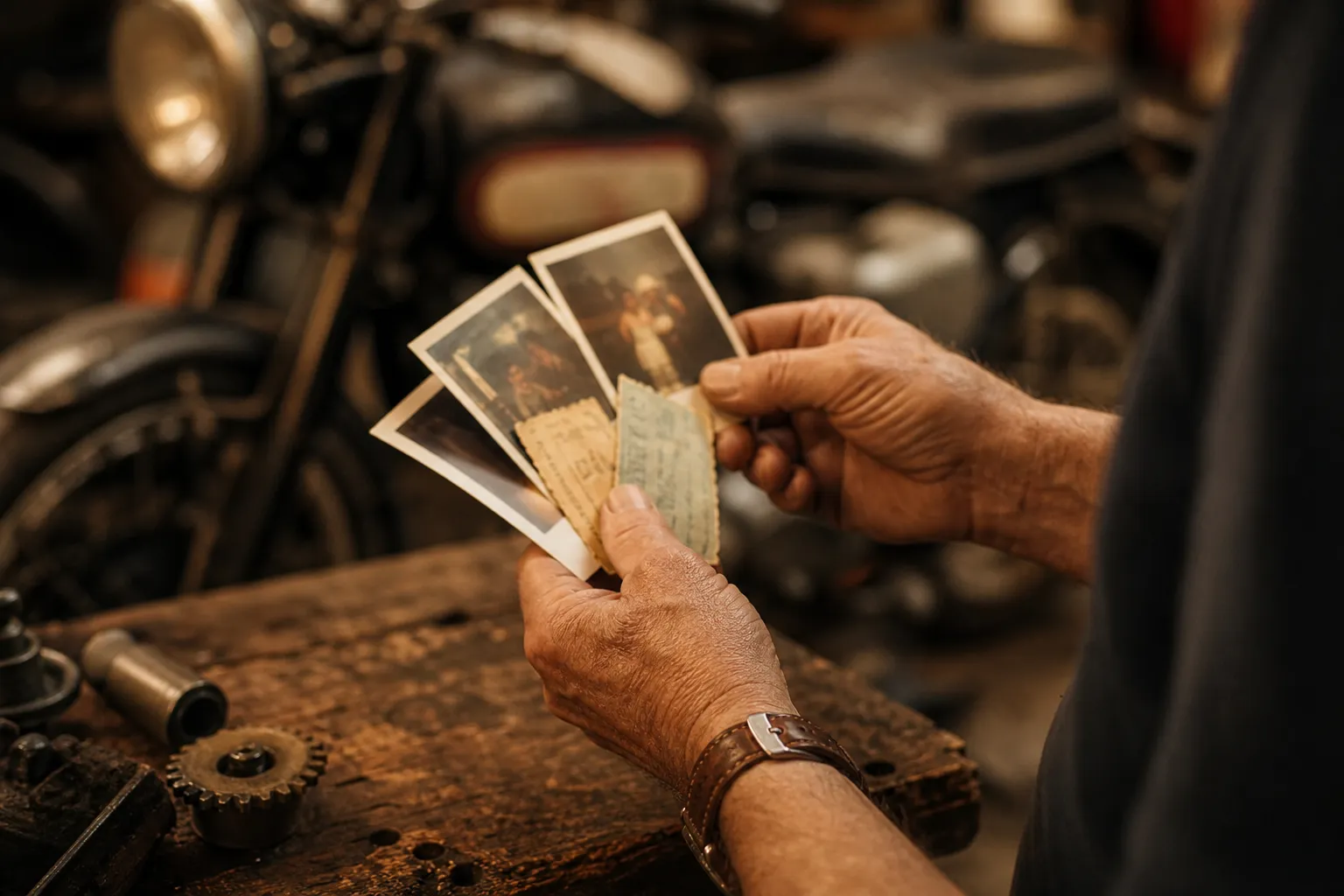
- Use objects as prompts. A first car, a tool, a specific photo, a uniform patch — concrete anchors unlock stories.
- Don't push when he goes quiet. That pause often means he's deciding whether to share something hard. Wait.
- Run shorter sessions. 30-45 minutes per visit, recurring. Families who record in shorter, recurring sessions capture significantly more content than those attempting marathons.²
This list is organized from easiest (childhood, first car, first job) to hardest (regret, family history, what he's never said). Concrete questions first.
His Childhood
Quick answer: Childhood questions are the safest warmups. Specific objects and places work better than abstract prompts.
Show 10 more questions
His Parents (Your Grandparents) From His Perspective
Quick answer: Your uncle's view of your grandparents is often very different from your parent's view. Different birth order, different gender, different role in the family — different relationship.
Why this matters: Multiple-perspective family memory is its own kind of family history. Each sibling experienced their parents differently. Your uncle's version isn't the truer one — it's just the one your parent isn't telling you.
Show 8 more questions
Your Mom or Dad as a Kid (The Version You've Never Heard)
Quick answer: This is the section your parent can't give you. Uncles watched their siblings up close — through phases that ended before you were born and that nobody talks about anymore.
Show 9 more questions
Worried about what to say next?
Pearl, your Whisper Storyteller, asks the follow-up questions for you — gently, one at a time.
Sample conversationWhat was your childhood kitchen like?
Oh, always warm. My mother baked bread every Saturday…
What did the kitchen smell like on those Saturdays?
Yeast and coffee. I can still smell it.
His Teen Years and Young Adulthood
Quick answer: Teen years are where many uncles loosen up — first jobs, first cars, first dances, first fights are all easy specific questions.
Show 9 more questions
His Military Service or What He Did in His 20s
Quick answer: If he served, this is a major story arc most families never ask about properly. Even if he didn't, ask what he did in his 20s — those years often carry stories nobody asks about.
If he served, ask the warmups gently and follow his lead. For a deeper veteran-specific list with Memorial Day questions and era-specific guidance, see our questions to ask a veteran guide.
Show 9 more questions
If he didn't serve, ask:
Show 3 more questions
His Career and Choices
Quick answer: Many uncles carry their work as core identity. Ask about specific jobs, specific bosses, specific tools — those are the doors.
Show 8 more questions
His Partnership, Marriage, or Choice
Quick answer: Uncles have a wide range of relationship arcs — long marriages, divorces, partnerships, choosing not to marry, choosing not to have kids. Ask with curiosity, not judgment.
Show 5 more questions
The Family Stories Nobody Else Will Tell
Quick answer: This is the section to ask carefully and on a quiet visit, with permission to record. Uncles often hold family history that nobody else will share.
Show 5 more questions
If he pulls back from any of these, accept it without pushing. "Got it, I won't ask again" is a complete sentence.
What He Watched in the Family
Quick answer: Uncles often have a witness-perspective on big family moments — births, deaths, weddings, divorces, moves. Ask what he saw.
Show 4 more questions
His Tools, Hobbies, and the Things He's Built
Quick answer: Many uncles have a vocabulary of tools, machines, sports, hobbies, or trades. Asking him to walk you through one is a stealth way to get hours of stories.
Show 4 more questions
His Reflections and Wisdom
Quick answer: Save these for later in the project, after he's relaxed. They're often the most thoughtful — and the most worth recording.
Show 4 more questions
What He Wants You to Know
Quick answer: These are the legacy questions. They tend to be the recordings family replay most.
Show 4 more questions
Just for Fun
Quick answer: Light questions are perfect for warmups and cooldowns.
Show 3 more questions
A Conversation Starter Set: 30 Minutes
Quick answer: If you only have one window with your uncle, ask these three in order. They're the fastest path to a recording your family will keep.
- "Tell me about your first car." — easy warmup, almost always a story
- "What was [my parent] like as a kid? Your version, not the official one." — opens family history honestly
- "What's something about you I should know that nobody else has told me?" — almost always the question he's been waiting to be asked
Hit record before question one. Phone audio is fine. Polish doesn't matter; presence does.
Tips for Asking These Questions
Quick answer: Talk one-on-one, ask permission, follow tangents, record everything, never push.
Talk one-on-one. Uncles share in private what they wouldn't share at a family event.
Ask permission to record. "Can I record this so I don't forget the details?" Almost everyone says yes.
Start concrete. First-car, first-job, his dad's tools — these are the anchors that unlock stories.
Follow the tangents. The most meaningful family stories often emerge from unplanned tangents, not scripted questions.³
Record everything. Memory fades roughly 50% within an hour without review.⁴
Ask follow-ups about objects. When he mentions a car, a tool, a place, ask "what did it look like?"
Don't push when he goes quiet. That pause often comes right before the most important sentence.
Don't gossip back to his siblings. What he shares with you stays with you. Trust matters.
Related Guides
- 100+ Questions to Ask Your Aunt
- 100+ Questions to Ask Your Mom
- 100+ Questions to Ask Your Dad
- 100+ Questions to Ask Your Grandma
- 100+ Questions to Ask Your Grandpa
- 100+ Questions to Ask Your Grandparents
- 100+ Questions to ask a veteran about their service
- Recording your grandparents' stories
- The complete family legacy preservation guide
You have the questions. Now you need 30 minutes, a phone, and the willingness to listen. Heritage Whisper turns the recording into a transcribed, organized family archive — every word preserved, every family story captured.
Sources:
- Cognitive Interview Research — "The Cognitive Interview enhances long-term free recall of older adults," Psychology and Aging, 2006
- StoryCorps — 645,000+ participants since 2003, with sessions averaging 40 minutes
- Frontiers in Psychology — "The role of intergenerational family stories in mental health and wellbeing," 2022
- Ebbinghaus Forgetting Curve — established psychology: memory fades approximately 50% within an hour without review
Frequently Asked Questions
What are the best questions to ask your uncle?
Start with concrete, specific questions about his own life — his first car, his first job, his career, military service if any — rather than open-ended ones. Most uncles answer specifics in detail and shrug at general questions. Move into questions about your mom or dad as a sibling (he saw your parent through teen years and twenties up close), then into family stories nobody else has told. Aunts and uncles are often the most candid family-history sources you'll find — closer to your parent's generation than a grandparent, but with less stake in protecting the official version.
Why ask your uncle instead of your parent or grandparent?
Uncles often have the unfiltered family stories your parent edits and your grandparent buried. They saw your dad or mom as a peer — through teen years, military or early career, the choices that shaped who your parent became. They have their own chapter of family history that nobody asks about because the focus is usually on grandparents and parents. And many uncles have served, traveled, worked in industries or careers that hold stories nobody in the immediate family has heard.
How do I get my uncle to open up?
Ask about objects and events, not feelings. 'Tell me about your first car' or 'what was your first job' or 'what was your dad like' will get you stories. 'How did you feel about that' will usually get you a shrug. Specific concrete prompts unlock memory and feelings together — the feelings come out inside the story, not in answer to a direct question. Talk one-on-one when possible; uncles often share in private what they wouldn't share at a family gathering.
What if my uncle served in the military?
Many uncles in your family tree served — and many have stories nobody has asked about properly. Start with how he ended up in the service (drafted, enlisted, family expectation), what basic training was like, and his unit or job. Save combat and losses for later. For deeper guidance, see our questions to ask a veteran guide. Don't assume combat — most veterans never saw combat, and the assumption can feel dismissive of what they actually did.